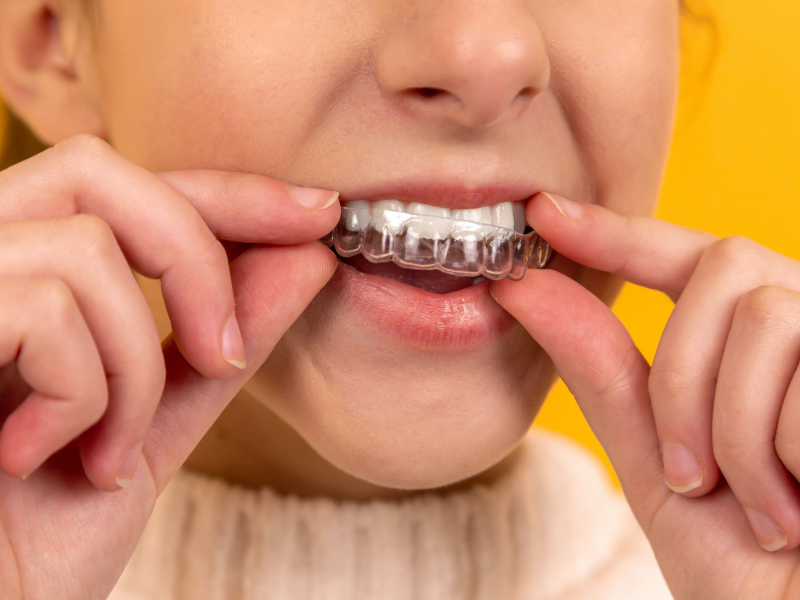
Are you pondering whether clear aligners are the right fit for you? Perhaps you’re in search of a discreet and comfortable method to straighten your teeth. Clear aligners have gained acclaim for their ability to align teeth without the need for conventional braces. However, determining your candidacy for clear aligners requires careful consideration. In this blog post, we will delve into the factors that establish someone as a suitable candidate for clear aligners, assisting you in making a well-informed decision about your orthodontic treatment choices.
Assessing Orthodontic Requirements: The Significance of Mild to Moderate Concerns
Clear aligners are most effective when dealing with mild to moderate orthodontic issues, such as:
1. Crowded Teeth:
If your teeth are crowded or overlapping, clear aligners can gradually guide them into proper alignment, creating space and enhancing overall oral health.
2. Teeth Gaps:
Clear aligners can close small to moderate gaps between your teeth, improving your smile’s appearance while diminishing the chances of food getting trapped and gum-related problems.
3. Bite Irregularities:
Various bite irregularities, including overbite (upper teeth protruding), underbite (lower teeth protruding), crossbite (misalignment of upper and lower teeth), and open bite (teeth not touching when the mouth is closed), can be addressed using clear aligners.
Candidacy Factors: Oral Health and Personal Accountability
Several factors must be taken into account to determine your eligibility for clear aligners:
1. Optimal Oral Health:
Before commencing any orthodontic treatment, maintaining good oral health is imperative. Your teeth and gums should be free from decay, gum disease, and significant dental issues. Addressing existing dental problems before starting clear aligner treatment is crucial for achieving the best possible results.
2. Compliance and Responsibility:
Using clear aligners requires disciplined commitment and personal responsibility. Adhering to the recommended 20-22 hours of daily aligner wear and diligently following the treatment plan are essential. Consistency and compliance play a pivotal role in realizing your desired smile.
3. Lifestyle Considerations:
Clear aligners offer the advantage of being removable, enabling you to enjoy your favorite foods without restrictions. Nonetheless, you must ensure consistent wear and track aligner changes throughout the treatment journey.
Realistic Expectations and Treatment Alternatives
While clear aligners are an excellent choice for many individuals, it’s crucial to set realistic expectations for your treatment:
1. Treatment Boundaries:
Clear aligners have limitations in addressing severe orthodontic issues or cases requiring substantial tooth movement. In such situations, your orthodontist might recommend traditional braces or alternative orthodontic treatments for more predictable and effective outcomes.
2. Personalized Treatment Plan:
Each individual’s orthodontic needs are distinct. Your orthodontist will evaluate your specific requirements and devise a customized treatment plan tailored to your circumstances. They will discuss the projected timeline, potential challenges, and anticipated results, empowering you to make an educated decision.
Making the Ideal Decision for Your Smile
Determining whether clear aligners are suitable necessitates a comprehensive assessment by a qualified dental professional. They will take into account your orthodontic needs, dental health, and personal preferences to identify the most appropriate treatment option. Clear aligners offer a superb alternative to conventional braces, enabling you to achieve a more aligned smile discreetly and comfortably.
If you seek a solution to correct mild to moderate orthodontic concerns while maintaining your lifestyle during treatment, clear aligners may be an ideal choice. However, it’s pivotal to consult your orthodontist to ensure a thorough evaluation and a personalized treatment plan.