Clear aligners have gained significant popularity as an alternative to metal braces for teeth straightening over the last decade. This trend is driven by several factors. Notably, individuals often prefer clear aligners due to their transparent and virtually invisible appearance. This characteristic has led both teenagers and, more recently, adults to embrace clear aligner therapy for addressing tooth alignment concerns. Moreover, research has highlighted that these inconspicuous teeth aligners can potentially reduce the duration of treatment, a crucial consideration for any patient.
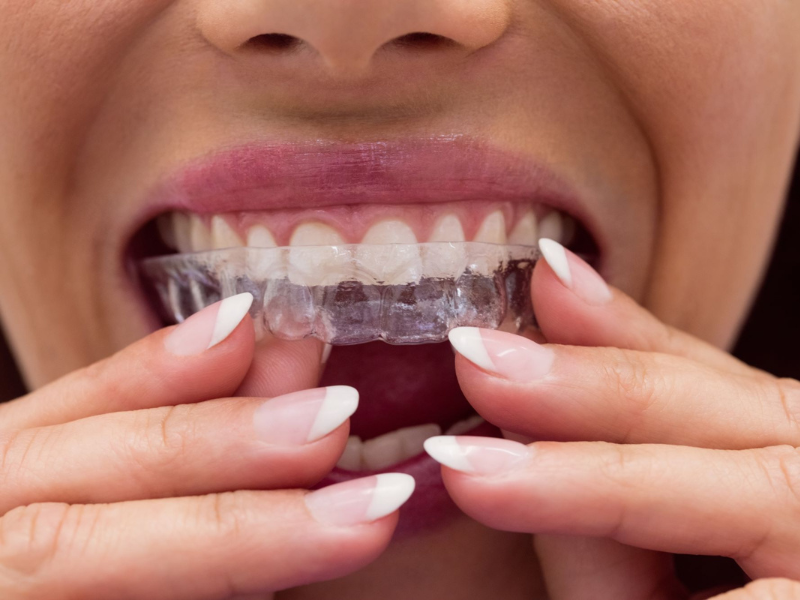
Dental aligners, fashioned from clear, medical-grade, and BPA-free plastic, bear resemblance to mouth guards as they cover the teeth. However, unlike traditional braces, these aligners are not affixed to the teeth and are instead removable, akin to sports mouth guards. A typical aligner treatment involves a series of clear plastic aligners, each designed to gradually shift the teeth in the desired direction. These aligners are exchanged every 7-14 days as the treatment progresses.
The number of aligners required for a given treatment can vary, contingent upon the specific treatment needs. Furthermore, adhering to the prescribed usage of aligners is imperative for the success of the treatment. Patient compliance plays a pivotal role in achieving the desired outcome.
Orthodontic aligners exert mild pressure on the teeth, which is subsequently transmitted to the roots and the jaw. The jaw responds by repositioning the teeth sockets and the teeth themselves. Due to their incremental approach, clear aligners generally offer a gentler treatment experience compared to traditional metal braces. However, this detachment from the teeth necessitates the use of “attachments,” discreetly colored and affixed to the teeth, which collaborate with the clear aligners to guide teeth into the correct alignment. These attachments facilitate the application of pressure from the aligners to achieve the desired results.
In certain instances, the use of elastics may be necessary. These elastics serve a similar purpose as those utilized with conventional metal braces and orthodontic treatments.